Forprene vs G10 vs Micarta: Choosing a Knife Handle Material
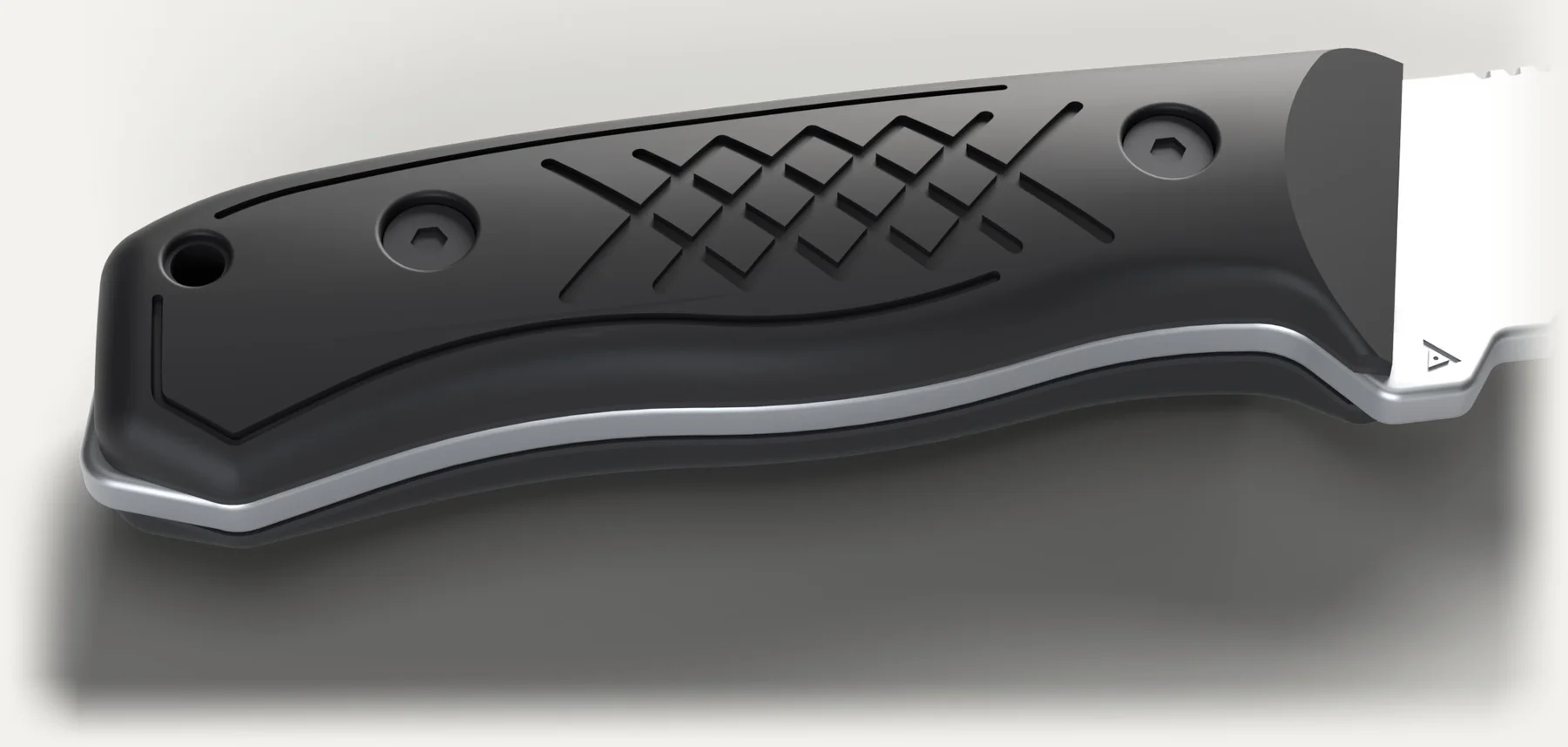
The steel gets the attention, but the handle decides whether a knife is pleasant or painful after an hour of work. Three materials dominate modern fixed blades: G10, Micarta and thermoplastic elastomers such as Forprene. Here is how they differ.
G10
G10 is a glass-fibre laminate: layers of woven fibreglass soaked in epoxy resin and pressed under heat. It is extremely strong, stable, light and almost unaffected by water or temperature. Makers machine textures into it for grip.
Strengths: very durable, dimensionally stable, many colours. Trade-offs: it is hard. Grip depends entirely on machined texture, and aggressive texture can wear on the hand during long use.
Micarta
Micarta is a similar laminate, but uses linen, canvas or paper with phenolic resin instead of glass fibre. It has a warmer, more organic feel and tends to grip better as it is used and slightly roughened.
Strengths: pleasant feel, good grip when worn in, classic look. Trade-offs: still a hard material, less resistant to moisture than G10, and the surface changes with use, which some people like and some do not.
Forprene
Forprene is a thermoplastic vulcanizate (TPV): cured EPDM rubber dispersed in a polypropylene matrix. The rubber phase gives it elasticity; the thermoplastic phase means it can be injection-moulded to precise shapes. Its supplier rates it excellent against UV, ozone and weather and resistant to acids, bases, alcohols, detergents and solvents, as well as to fatigue and abrasion.
Strengths: gives slightly under the fingers, grips well when wet, cold or gloved, absorbs shock, insulates against cold. Trade-offs: softer surface than a laminate, so it needs a full steel tang underneath for strength.
Side by side
| G10 | Micarta | Forprene | |
|---|---|---|---|
| Material type | Glass fibre + epoxy laminate | Linen/canvas + phenolic laminate | TPV: EPDM rubber in PP |
| Feel | Hard | Hard, warmer | Firm with slight give |
| Grip source | Machined texture | Texture, wears in | Material + moulded texture |
| Shock absorption | Low | Low | High |
| Cold hands | Neutral | Neutral | Insulating |
Why we chose Forprene for the Core
The Core has a 5.0 mm full tang, so the strength is in the steel. That frees the handle to do one job: grip. We wanted something that holds in rain and in winter gloves without sanding the skin off your palm, so we went with Forprene and moulded a diamond-lattice relief and contour grooves into it. The slanted front gives the index finger a fixed stop.
See the full handle specification on the Core page.